● SOIL EDUCATION
Healthy soil is living soil
Healthy soil is alive. Beneath every step in the māra lies an entire universe of bacteria, fungi, protozoa, and nematodes working together as the Soil Food Web. At Growing Point we take a biology-first approach: when we grow life in the soil, the soil in turn grows nutrient-dense kai, resilient ecosystems, and thriving communities.
Our education programmes invite growers of all levels to understand and work with this living system. Whether you're a backyard gardener, a school kai leader, or a seasoned grower, our workshops show how composting, soil care, and microbial partnerships can transform the way you grow and eat.
● Courses
Our soil education programmes
Whether you're looking to deepen your own understanding or bring soil education to your community, we offer two ways to learn.
Microscopy & Compost Course
Our flagship four-part course.
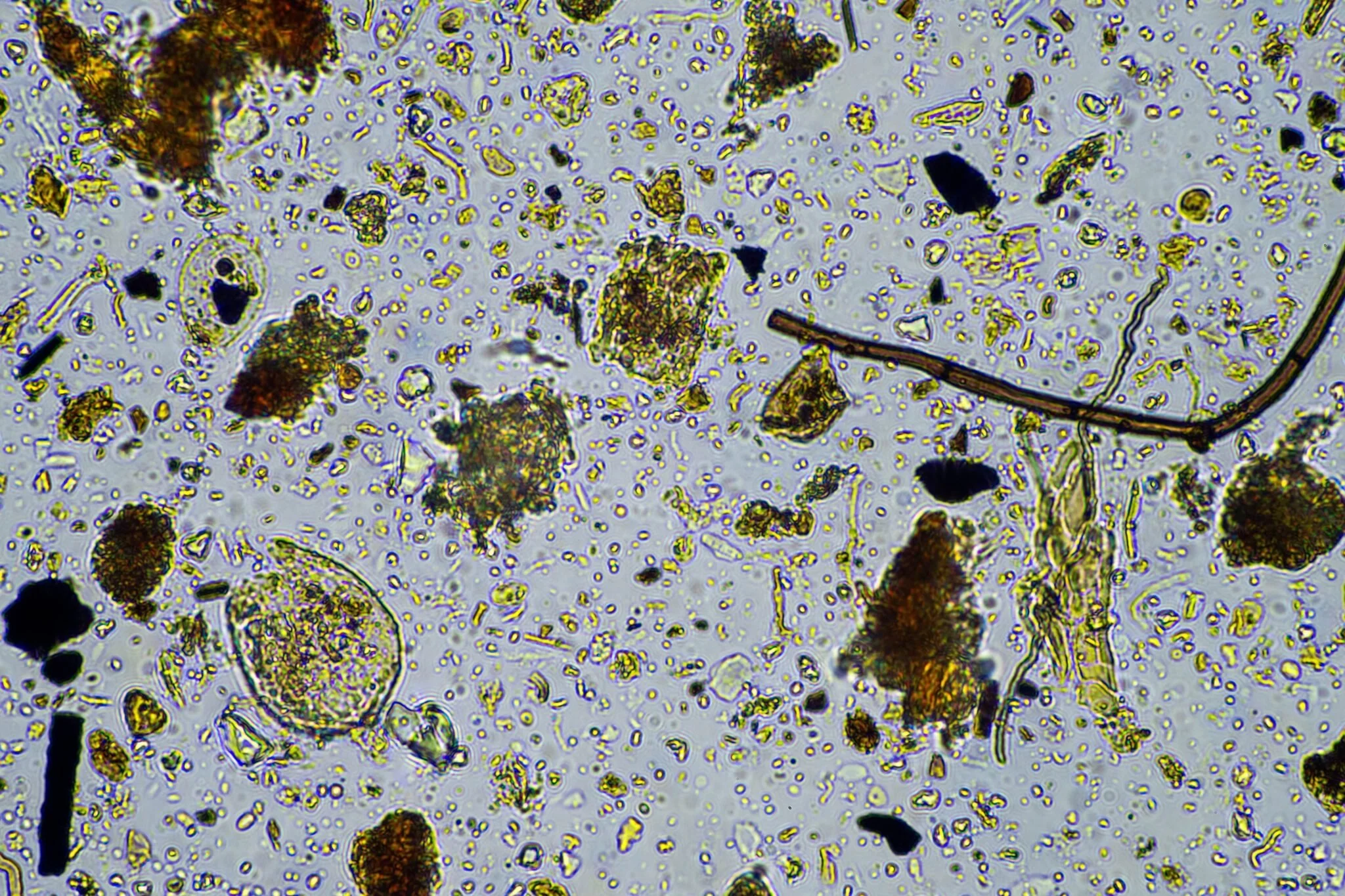
Online learning combined with practical, hands-on sessions to explore the unseen life of healthy soils. Learn to recognise beneficial microorganisms, create biologically diverse compost, and understand how soil biology supports thriving plants.
Mobile Microscopy Unit
We bring the lab to you.
Designed for community gardens, marae, composting projects, schools and growers, our mobile workshops combine live microscopy with practical soil health assessments and site-based learning.
● Soil Biology 101
Understanding the soil food web
Soil is a living ecosystem where every organism, from bacteria and fungi to protozoa and nematodes, plays a role in cycling nutrients and supporting plant life. Beneath the surface, billions of microscopic interactions are constantly taking place. Nutrients are exchanged, organic matter is broken down, and plants interact with the living community surrounding their roots.
We know that soil is not an inert growing medium, but instead a dynamic and interconnected system. When this biology is thriving, soils become more resilient, hold water more effectively, and produce healthier, more nutrient-dense kai.
-
The majority of the nutrients plants need are already stored within the mineral structure of the soil itself, held inside sands, silts, and clays formed from the parent material beneath our feet. Nitrogen, phosphorus, potassium, calcium, magnesium, and trace minerals can exist in abundance, but in forms that plants cannot easily access on their own.
Without biology, much of this fertility remains locked away. Healthy soil life acts as the bridge between minerals and plants, changing inaccessible nutrients into forms that roots can absorb and use.
-
Every member of the Soil Food Web has a role to play. Bacteria and fungi begin breaking down fresh organic matter and unlocking minerals using specialised enzymes. Fungal networks transport water and nutrients through the soil while helping create structure and stability.
Protozoa and beneficial nematodes feed on bacteria and fungi, releasing excess nutrients in plant-available forms directly within the root zone. Together, these organisms drive the nutrient cycle that supports healthy plants and provide exactly what is needed, as it is needed.
-
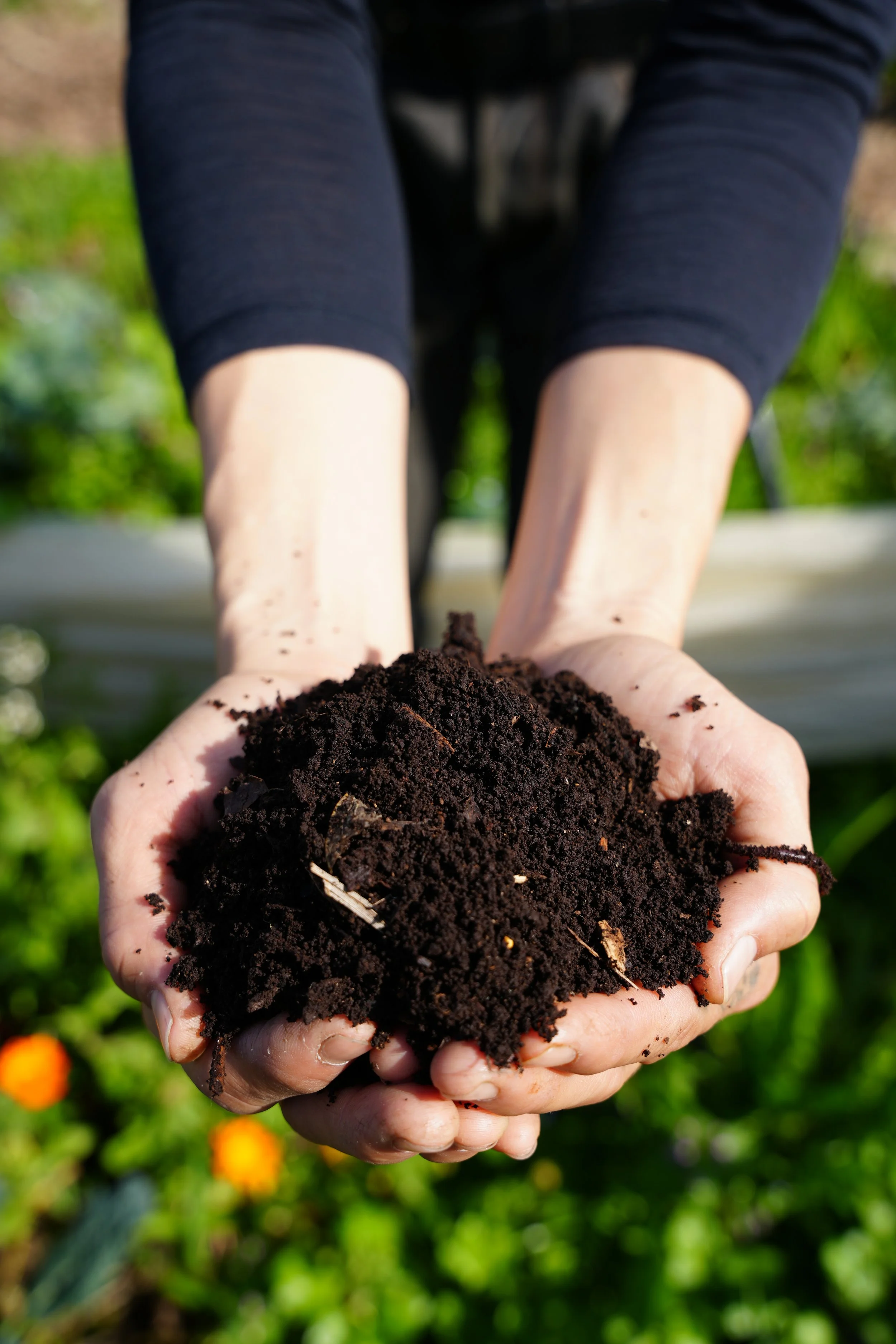
Creating and applying high-quality compost is one of the most effective ways to restore biological life to the soil. Good compost introduces a diverse and balanced community of microorganisms that help rebuild nutrient cycling, improve soil structure, and strengthen plant health.
At Growing Point, compost is understood not simply as a fertiliser, but as a living inoculant that helps bring life—and mauri—back to your soils.
-
Everything we teach is grounded in practice. At Dignan Street Community Garden we apply Soil Food Web principles every week through compost production, soil observation, biological amendments, and regenerative growing methods.
Our education programmes are built around what we use ourselves. Rather than teaching theory in isolation, we share the tools, observations, and techniques that guide our day-to-day growing, giving participants practical skills they can confidently apply in their own gardens, farms, schools, and communities.
Ready to learn more?
Whether you're interested in exploring the microscopic world beneath your feet or bringing hands-on soil education to your community, we'd love to learn with you.